On-boarding / Tutorials
Help people get used to the system with a nice tutorial or a gentle introduction on how everything works.


 Award Winning Agency
We analyze your business – finding your successes and pain points – working to turn the latter into the former. Upon analyzing your user engagement levels, i.e. how successful you are at interacting with potential customers, we make recommendations as to how to boost your business.
Gamified Labs services can include the development of a new website, app or game, or upgrading an existing one. We can offer a number of customizable platforms to help you both internally and externally.
We will help your business meet its internal and external objectives through integrating effective gamification techniques into your day-to-day processes and activities.
Externally, Gamification has been proven to increase customer retention, engagement, and loyalty. Internally, Gamification produces the appropriate incentive schemes for your employees to meet your business objectives and compete more effectively in this turbulent market. Our platform helps your employees balance competition with cooperation in order to build an innovative and challenging workplace.
Gamification has the incredible power to make everything feel like fun – your users will interact with your business effortlessly and out of their own interest and entertainment.
Elements of gamification, as dissected in the book “Gamify: How Gamification Motivates People to Do Extraordinary Things” by Brian Burke includes Game mechanics, Experience design, Digital engagement, Motivation and Goal achievement.
Game mechanics describes the key elements that are common to many games, such as points, badges, and leaderboards. Experience design describes the journey players take with elements such as game play, play space, and story line. Lastly, Gamification is a method to digitally engage rather than personally engage, meaning that players interact with computers, smartphones, wearable monitors, or other digital devices.
The goal of Gamification is to motivate people to change behaviors or develop skills, or to drive innovation. It focuses on enabling players to achieve their goals—and as a consequence the organization achieves its goals.
Help people get used to the system with a nice tutorial or a gentle introduction on how everything works.

Give gamification a theme, often linked with narrative. Add a little fantasy, just make sure users can make sense of it.

Curiosity is a strong force. Not everything has to be fully explained, a little mystery may encourage people in new directions.

Some just need to understand the meaning or the purpose of what they are doing. Make people feel they are part of something greater than themselves.

Access to more features and abilities in a system can give people more ways to help others and to contribute.

Points and XP can be used to track progress, as well as to unlock new things. Award based on achievement or desired behavior.

Commonly used to show people how they compare to others and so others can see them.

Award Badges and achievements to people for accomplishments.

Allows people to spend their virtual currency on real or virtual goods.

Challenges help keep people interested, testing their knowledge and allowing them to apply it.

Gives user the opportunity to learn and expand.

Quests give users a fixed goal to achieve. Often made up from a series of linked challenges, multiplying the feeling of achievement.

Levels and goals help to map a user’s progression through a system.

Creates platforms for collaboration but also pave the way for team based competitions.

Allows people to connect and be social with an easy to use and accessible social network.

Status can lead to greater visibility for people, creating opportunities to create new relationships.

Matching people based on interests and status can all help get people started.

Competition gives people a chance to prove themselves against others.

Surprise and delight people with unexpected rewards.

Reward people based on defined actions and events.

Events that happen at specific times or are only available for set period.

Add to the feeling of self-expression and value, by offering unlockable or rare content for free spirits to make use of.

Gives people the tool to customize their experience.

Gives people the tool to customize their experience.

Badges and achievements are a form of feedback

Apply rules with a light touch. See how things play out before jumping in.

Gamification helps to strengthen understanding of your story by involving people.

Awards based on achievement or desired behavior.


GamifiedHR is the first of its kind, adding gamification elements to the process of job hunting and finding employees. Unlike existing online job boards, GamifiedHR adds a human element to the search, integrating video cover letters and rewarding loyal and ambitious user behavior.





Gamification is not a product, it’s a process. We are constantly evolving it over time in an agile way where we seek to improve the nature of the game and interaction we have with the users over that arc of time. It’s the underlying mechanics andconcepts of games that make them compelling. When we bring in the notions of loyalty programs and behavioral economics and combine with games we take those ideas and create powerful and lasting engagement with consumers and employees. To put it simply, gamification incorporates fun and an element of competition to a marketing strategy.

Rewarding players with points and badges or displaying top players on special leaderboards, marketers can appeal to the competitive nature of humans and successfully engage consumers with the brand. Games can offer new ways to power up communities and create a sense of natural and fun competition to boost engagement and capture new potential leads.

The application of psychology and game mechanics, like competition, point scoring, rules to play, etc., to make users behave in a desired way as well as motivate them to perform tasks that require effort and time
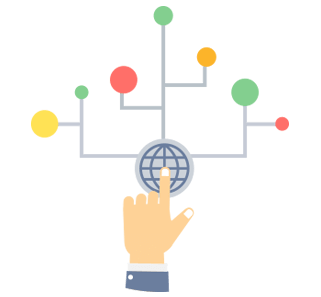
Using games and play to achieve real-world goals does not necessarily imply that seriousness will be taken away from the activities being accomplished. Instead, it means that these activities must be designed in ways that leave space for playful minds to experiment and create innovative solutions, for gameful minds to take on challenges that will lead to the accomplishment of quite difficult goals, and for many people to cooperate in ways that will allow the accomplishment of greater goals that would not be possible with the efforts of one person alone.

A well-executed strategy carries your business and digital marketing success well into the future. To begin, our design process involves marketing, action pathways, calls to action, and conversion mechanisms, all of which combine to bring profitable ROI. Strategies cover everything from modern design, analysis of current websites, competitor analysis, creation of user pathways, creation and/or refinement of calls to action, site architecture, multiple marketing strategies and recommendations.

Our marketing encompasses many different disciplines, including market research, branding, direct sales and customer service. Ultimately, the marketing process leads to the best way to promote and sell your company’s goods and services. The principle of incentive marketing is simple: Purchase a product or service and get rewarded.

Rewards programs can work for a variety of types of businesses from local consumer businesses to enterprise B2B. Our program design and messaging is targeted toward your audience and the rewards program structured in a way that makes sense to your audience. Exclusive offers, contests, product launches or sales initiatives can be structured to activate your audience across various media channels.

Building customer loyalty means creating loyalty programs that reward repeat behavior. The power of loyalty grows exponentially over time. Loyalty drives profitability in three primary ways: Repeat Business, Retention and Word of Mouth.